|
The Writing Center is back for the 2016-2017 school year!
As many of you are aware, Ms. Winstead has moved and can no longer sponsor us. So starting this year, Ms. Carroll is our sponsor! The Center has been moved to her room, 2310, and the future looks bright! Thank you Ms. Carroll! Since SHIELD doesn't exist this year, we're using advisories! Once the Center officially opens again, we will have tutor coverage of almost every block. For tutees with advisories that we won't be able to cover, before and after school sessions will also be made available. We hope that we reach as many people as possible this year; essay season is coming up fast! New tutor registration is also open! If you are interested in becoming a tutor this year, click on the "Tutor Resources" tab at the top, and the link to the new tutor application form is the second one down. In addition to filling out this form, you must submit a piece of your best writing, either physically or by email. This sample must not exceed five pages, and make sure it's your best! It can be an essay, a narrative, a poem - anything that you believe demonstrates your writing ability. Returning tutors do not have to reapply. We're looking to open our doors as soon as we get an idea of our numbers, so we encourage anyone applying to do so as soon as possible, and returning tutors to let us know that they are coming back. This year is going to be the best yet! - The Writing Center Staff
1 Comment
Too many people nowadays view writing as solely academic. With textbooks and sometimes dull literature assignments throughout schooling, the adventure involved in writing is masked. Every high school student wants to experience this adventure and to feel the flying wings of freedom that we find when we go to a place we have never been and this academic writing has attempted to hide literature's naturally adventurous qualities.
Imagine journalists, they go to the ends of the earth in the deepest, darkest, and most dangerous places. The journalist will then take these experiences and use them to craft a piece of writing that emulates the adventure that they experienced. National Geographic is a perfect example, the explorers that work for them do not only write about a certain place but they GO there. From the humid Swahili coast of Africa, to the cold woodlands of Russia. I encourage you to ponder the origins of the next piece of writing that you read. Where did it come from? Why did that author feel the need to write this piece? These questions will allow us to feel the emotion in literature and see the piece as less solely academic. Lastly, if you are one of the high school students with an adventurous spirit that craves explorations and loves to write, consider a career in journalism. Don't let anyone tell you that you need a degree in something you don't love just because it is stable and is hiring. Do what you love! Gray The works of William Shakespeare are often though of as daunting, dull, only for pretentious people, or all three. Many, especially those with limited exposure to his works, view them as something unattainable.
In reality, Shakespeare isn’t as hallowed as everyone may think. The exceptionality of Shakespeare’s work doesn’t come from the fact intellectuals and professors study it, it comes from the universality of the messages and stories, and the language, both beautiful and clever. Shakespeare’s plays were originally enjoyed by all social classes in 17th century Britain. All of this is to say that I would recommend, no matter who you are, giving Shakespeare a shot. The first and largest obstacle people have is the language. Admittedly, this is one of the more difficult aspects. However, just like any other language, the longer one spends immersed in it the better an understanding one will have. This presents a bit of a problem for those wishing to read or watch a Shakespeare performance for the first time. While unfortunately this means it takes a little bit of time to develop the ability to just pick up a script and start reading and analyzing, there are fortunately tons of ways one can enjoy Shakespeare even if they have no experience at all. Keep in mind that the belief that the language is difficult to follow can often prevent people from trying to understand it. The number one thing to do is to go see a performance of a play. Shakespeare was written, in reality, to be performed, not read. Any good Shakespearian actor will convey a full understanding to the audience without having to understand each word individually. Watching a performance of the show before reading and analyzing can be incredibly helpful to understanding and gaining new insights later, and you don’t need to feel bad about it because performance was the original purpose of the script! If you are reading, I would recommend getting a copy that has footnotes. Try reading it without referencing them at first, and then take a look. Often it is easier and easier as you go along, and you need to reference them less and less. In the end, remember that Shakespeare is not just for dissection. It is art, and, if one is willing to put in just a little extra work, one can understand and enjoy that art in all of its wit and wisdom. I would encourage everyone to try to experience some of the original works of William Shakespeare, and you may find it is far more enjoyable than you ever thought it could be. -Lydia It’s that time of year again...course selection time! Good luck trying to avoid talking about or even listening to the dread of students as they struggle to decide what courses to take next year. To help you alleviate this stress, and make things easier, here’s a list of do’s and don’ts and tips, to make sure you sign up for success in your future school years to come.
~Vandana Keshavamurthy Here at Champe, there is a writing assignment that all students go through, which is the Big Question. This consists of an essay, answering a debatable question, with a presentation. Last year was my first time doing a Big Question as a freshman and I learned that you must be confident with the choice of your question because you must do a lot of research to provide evidence as why you are correct. You also must be passionate when answering because it shows how connected you are to the question. Some teachers allow you to choose a question, but some assign you one. My teacher this year informed us that we would be starting this project soon, which is a huge part of your grade. Teachers look for an essay/presentation that shows you really comprehended the question and made a real effort in voicing your individual opinion. The Big Question is assigned to allow adolescents to share their commentary on real world issues. If you really try and find resources, you learn much more than you thought you would. Make sure to find credible resources because that makes the information you are giving more reliable. This means no Wikipedia! Although it is a lengthy process, it is well worth it because you end up gaining more knowledge. This can benefit you because you will be less biased (from researching both ends of the question) or you can potentially educate others on the topic. You will become very familiar with your Big Question and hopefully will deliver a thought provoking presentation. Even though the Big Question may seem like a burden now, it will most likely enlighten you on the world around us.
Make sure to come to the JCHS Writing Center for help on any essays for the Big Question! - Ernie 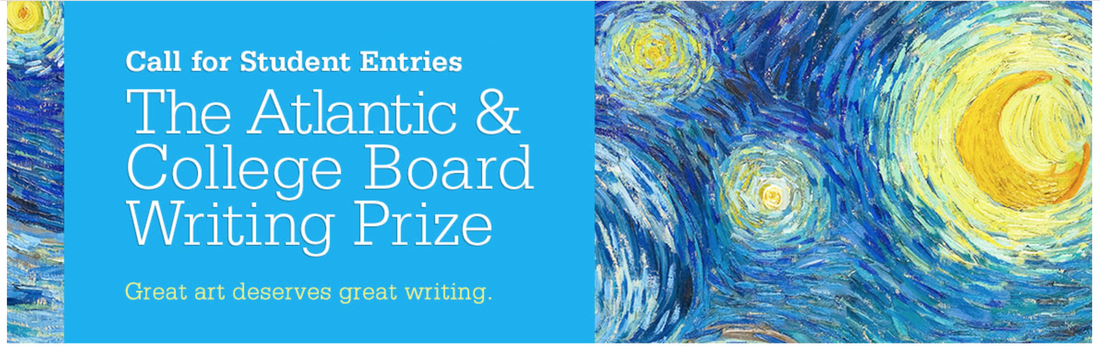 Calling all writers! Check out this awesome essay contest!
 Click the image to view the PPT We’re a month into the New Year, and as expected, many people have already quit their New Year’s resolutions. However, there’s not a designated time or day to start improving upon yourself. Though many people think of the first month as that designated time, I prefer to think of January as a “trial month” for the New Year. February can easily be the start of your New Year, you just have to put your mind to it and stick with those resolutions. There are a couple of actions you can take prior and during your resolutions to make the road slightly less bumpy.
1. Plan ahead. During the weeks before your starting point, make mental, or physical, notes about what you want to improve upon in your life. Go into depth with these improvements, think about what you want from them and how they’ll benefit you in the long run. If you have a set plan, and have been thinking about making this change for a while, it will boost your motivation to stick to it. 2. Make your goals reasonable. When planning your improvements, don’t make one large daunting task, rather create steps leading up to what you want to accomplish. Additionally, don’t make your “improvements” or goals list overwhelmingly long. You may have 32 goals that you want to accomplish, but you can’t start working on all of those goals at the same time. Having a few, step-by-step goals will make the probability of keeping your improvements much more likely. 3. Talk about it. Share your goals with family and friends. It may seem like a bad idea, because you don’t want them to know if you quit, but that’s the exact reason to tell them. By telling your family and friends, you create another motivational aspect for your goal, because you don’t want to disappoint them or admit to them that you’ve failed. You also create a good safety net. They’ll want to support you and help you get to your goal. 4. Don't beat yourself up. Remember that it's okay to fall of off the "New Year's" wagon. You can get back up on that horse and try again. With your family and friends as a support group to lean back on, you’ll be able persevere and try again, no matter the task. A New Year’s Resolution or improvement isn’t going to happen overnight and you’re going to need to remind yourself about why you’re making this change, and what its worth to you. New Year’s resolutions are supposed to be a new, exciting adventure. Don’t turn them into a painful experience. If you plan to make a few, quality improvements, and don’t create a time limit or focus on them severely; it can be an effective, efficient year for you! - Laila The 55, 40, or even 25 minutes during a timed write can be immensely stressful for students as they are trying to write an effective essay under the pressures from the time constraint. However, writing an essay under such conditions is something that all students must eventually face since timed writes show up on the SAT, ACT, and in AP classes. From writing DBQ's to rhetorical analysis timed writes, students must master the skill of thinking quickly and critically while remaining calm. According to Jerz, here are the top 5 tips for writing timed writes:
Source: http://jerz.setonhill.edu/writing/academic1/timed-essays-top-5-tips-for-writing-academic-essays-under-pressure/ -Vivian For many students, research papers can be confusing and scary. When asked what was most intimidating about writing a research paper, AP Lang student Palak Shah responded: "I think its difficult to make the tone of your research paper professional rather than persuasive. I'm also worried that I will drown my voice in facts."From finding a topic, to finding reliable sources, the process of writing a research paper is overwhelming for any person.
Fortunately, there are many online sources that help to simplify the process of writing a research paper. Georgetown University claims that in order to write a good research paper it is necessary to: have a clear topic, do real research, form an argument, and write well. A vague topic will be hard to research and answer, so it is better to have a concise and clear topic in order to be able to know what exactly to search for. As for the actual research, use reliable sources. While the internet is an amazing resource, do not rely on only that for research. Utilize other resources such as libraries to gather information. Forming an argument is key to turning a paper from simply a summary of sources to a research paper. Writing well takes practice and effort. Mainly, try to keep the research paper in a logical order, and be concise. Also, get feedback from peers and teachers to improve the paper. Sources: http://faculty.georgetown.edu/kingch/How_to_Write_a_Research_Paper.htm -Marissa Kaplan |

Writers
|
Photo used under Creative Commons from Pawstruck.com
